Leave Your Message
Choosing the best Sport Boat starts with an honest question: how will you actually use it?
Will you cruise across a quiet lake, tow a wakeboarder, or explore coastal bays? A sleek hull may look impressive at the marina, yet feel cramped after two hours on the water. A larger engine can deliver thrilling acceleration, but it may increase fuel costs, noise, and maintenance demands.
Marine author Nigel Calder offers a practical principle: “The best boat is the one that suits your needs.” That sounds simple. It is not always easy to apply.
A responsible buyer should compare passenger capacity, hull design, engine reliability, storage, safety equipment, and trailer weight. Sit in the cockpit before deciding. Imagine wet towels on the seats, coolers underfoot, and children moving around during a busy afternoon. These details reveal more than polished photographs.
Independent reviews and professional inspections add useful evidence. However, no review replaces a proper sea trial. Test the steering at low speed. Check visibility from the helm. Notice how the Sport Boat handles sharp turns and small waves. Bring the people who will use it most.
Budget mistakes happen. Even experienced owners sometimes underestimate winter storage or annual servicing. I would not ignore that warning.
The ideal Sport Boat is not necessarily the fastest or most expensive model. It should match your experience, water conditions, lifestyle, and realistic budget. A thoughtful choice creates better days on the water, with fewer unpleasant surprises later.
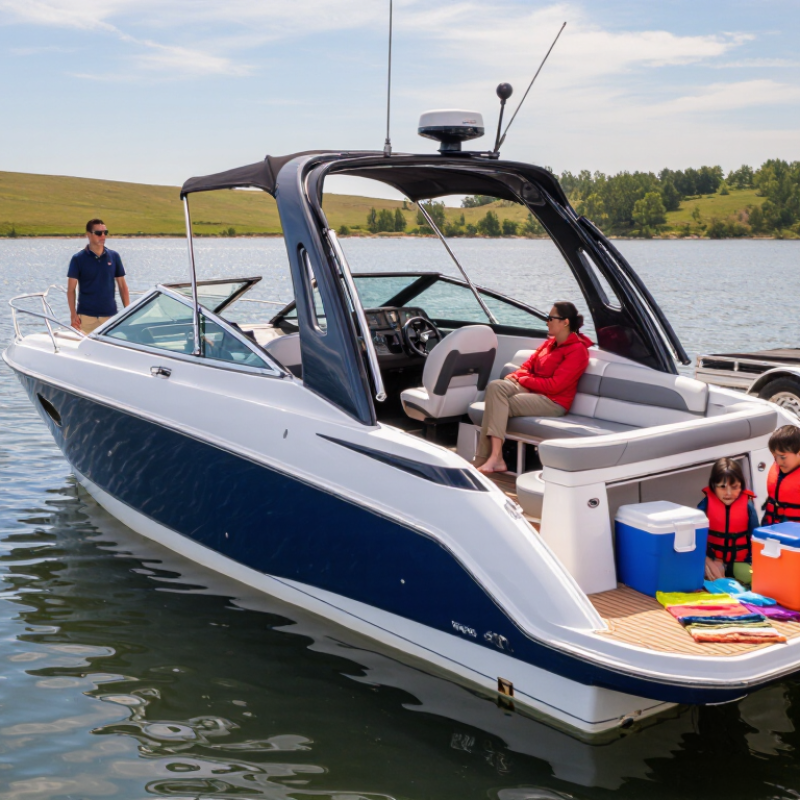
Choosing a sport boat starts with an honest question: What do you want to do on the water?
Your answer shapes the hull, engine power, seating, storage, and safety equipment. A boat for relaxed family cruising needs different features than one for towing riders or practicing sharp turns. Write down your usual crew size, trip length, and preferred activities. Do not choose for an imaginary perfect weekend.
Be realistic.
Then study your typical water conditions. Calm inland lakes may suit a lighter, responsive boat with modest freeboard. Coastal areas often demand a deeper hull, stronger construction, and better protection from spray. Check wind patterns, wave height, water depth, and launching facilities near your regular boating areas. I once underestimated afternoon chop on a broad lake, and the short ride became tiring for everyone onboard.
That mistake changed how I evaluate boats. I now inspect helm visibility while seated, not just while standing at a showroom. I also look for dry storage, secure handholds, clear engine access, and enough space around the cockpit. Test the boat with a realistic load whenever possible. A model that feels lively with two people may feel sluggish with six passengers and full equipment. Ask an experienced dealer or qualified marine technician to explain performance data, maintenance needs, and local operating limits. Specifications matter, but real water behavior matters more.
| Primary Boating Goal | Typical Water Conditions | Recommended Boat Type | Useful Length Range | Hull and Drive Characteristics | Typical Seating Capacity | Key Features to Look For | Planning Note |
|---|---|---|---|---|---|---|---|
| Family cruising and day trips | Protected lakes, rivers, bays, and calm coastal waters | Bowrider or dual-console boat | 5.2–7.3 m | Moderate-V deep-V hull with an outboard or sterndrive | 6–10 people | Windshield, comfortable seating, swim platform, shade canopy, and dry storage | Prioritize layout, stability, boarding access, and safety equipment over maximum speed. |
| Water skiing, wakeboarding, and tow sports | Calm inland water with sufficient room for repeated turns | Tow-sports boat or performance bowrider | 5.5–7.6 m | Inboard or specialized stern-drive setup with strong low-speed control | 6–12 people | Stable wake, tow pylon, ballast system, mirror, board storage, and easy reboarding | Confirm local rules for towing and allow space for riders, observers, and safety gear. |
| Fast recreational driving | Large lakes, wide rivers, and sheltered coastal areas with manageable waves | Performance runabout or sport cuddy cabin | 5.5–8.5 m | Deep-V or stepped hull with an outboard or stern drive | 4–8 people | Responsive steering, secure helm seating, trim control, strong grab handles, and reliable gauges | Higher speed requires greater visibility, more open water, and stricter attention to weather. |
| Fishing combined with recreational boating | Calm to moderately choppy lakes, rivers, estuaries, and nearshore waters | Fish-and-ski boat or multispecies fishing boat | 4.9–6.7 m | Planing hull with an outboard; moderate freeboard for improved versatility | 4–7 people | Swivel seats, casting deck, livewell, rod storage, fish boxes, and removable seating | Choose a layout that converts efficiently between fishing mode and passenger mode. |
| Longer coastal day cruising | Protected coastal water with occasional wind chop and short-period waves | Cuddy cabin or compact cabin cruiser | 6.7–9.1 m | Deep-V hull with high freeboard and an outboard or sterndrive | 4–8 people | Enclosed berth, marine toilet, galley space, wind protection, navigation lights, and substantial storage | Check fuel range, weather protection, bilge systems, and overnight comfort before purchase. |
| Open-water coastal use | Moderate chop, changing wind, and occasional longer runs from shore | Offshore-capable center console or walkaround boat | 6.7–10.7 m | Deep-V hull, self-draining cockpit, high freeboard, and dependable outboard propulsion | 4–8 people | Weather-resistant helm, substantial fuel capacity, navigation electronics, leaning post, and large bilge pumps | A suitable hull does not eliminate weather risk; always check forecasts and carry communication equipment. |
| Shallow-water exploring | Protected flats, rivers, marshes, and areas with limited depth | Flats boat, skiff, or shallow-draft aluminum boat | 4.3–6.7 m | Shallow-draft hull with a tiller, outboard, or optional shallow-water propulsion system | 2–6 people | Low draft, poling platform, high-efficiency outboard, corrosion resistance, and easy beaching | Verify draft under load and allow extra clearance for passengers, fuel, and equipment. |
| Low-maintenance recreation and transport | Freshwater lakes, rivers, and sheltered bays | Aluminum utility boat or simple outboard runabout | 4.3–6.1 m | Lightweight modified-V or moderate-V hull with an outboard | 3–6 people | Easy trailering, durable flooring, simple controls, corrosion protection, and accessible maintenance points | Small, lightweight boats often reduce storage, launching, fuel, and routine maintenance costs. |
| Extended trips with overnight capability | Protected coastal waters, large lakes, and carefully planned nearshore routes | Cabin cruiser or compact pilothouse boat | 7.6–11.0 m | Deep-V hull with enclosed helm and outboard, sterndrive, or inboard propulsion | 4–8 people | Sleeping berths, freshwater system, marine sanitation, auxiliary power, ventilation, and weather protection | Compare payload, fuel consumption, maintenance access, marina fees, and emergency systems. |