Leave Your Message

10 Best Fiberglass Yachts for Sale in 2026

A yacht listing can make a boat look effortless: bright gelcoat, polished rails, and a cockpit ready for sunset. Ownership is less simple. Buyers must weigh hull condition, engine hours, maintenance records, layout, and the cost of keeping a vessel in service. Fiberglass remains a common choice because it supports varied hull designs and finishes, but material alone does not prove a yacht is sound.

Market figures offer context, not a buying verdict. Grand View Research’s Recreational Boat Market report estimated the global market at approximately US$35.6 billion in 2023 and projected a 6.2% compound annual growth rate from 2024 to 2030. That estimate covers recreational boats broadly; it is not a forecast for yachts alone. Still, it signals a substantial market in which models, prices, and availability can shift. That sounds tidy. Real shopping is messier.

This guide to the 10 best fiberglass yachts for sale in 2026 focuses on practical comparisons: intended use, living space, performance, build details, and likely ownership demands. Listings change, and advertised equipment may not tell the whole story. Treat specifications as a starting point, then confirm them against maintenance documents and an independent marine survey. A beautiful finish can hide expensive wear. No shortlist can replace careful inspection, but it can help buyers ask sharper questions before making a serious commitment.
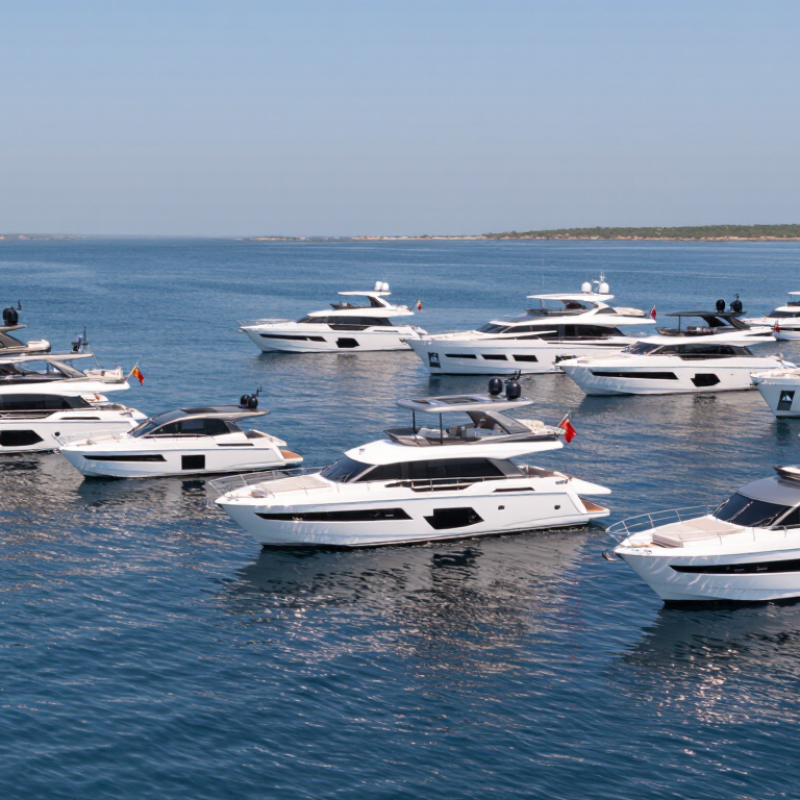
10 Best Fiberglass Yachts for Sale in 2026

Define the Selection Criteria: Length, Beam, Draft, Displacement, and Asking Price

Length is the first filter, but it should match how you plan to use the yacht. A 40-foot hull may offer easier handling and lower dockage costs than a 55-foot model. Check the stated length carefully: listings may measure the hull differently from the overall length, including platforms. Small detail, big difference.

Beam affects interior space and access to a berth. Compare the yacht’s maximum beam with the width available at your intended marina. Draft matters just as much in shallow anchorages; note whether the listing gives a loaded or unloaded figure. Displacement helps explain how the yacht behaves and what it demands from its engine, sails, and lifting equipment. A heavier boat may feel steadier, yet cost more to haul and maintain. The numbers do not tell the whole story.

Treat asking price as a starting point, not a verdict. Compare yachts of similar age, length, equipment, and condition, then account for survey findings and near-term repairs. A fresh-looking cabin cannot reveal moisture behind a liner or worn steering components. Ask for maintenance records and confirm key measurements with the seller or a qualified surveyor. I would leave room for uncertainty in any budget; estimates can be wrong, and repair costs rarely arrive one at a time.
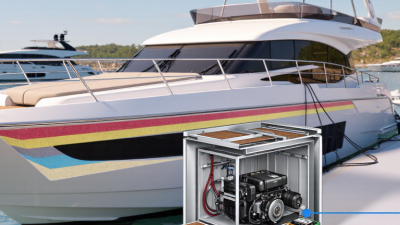
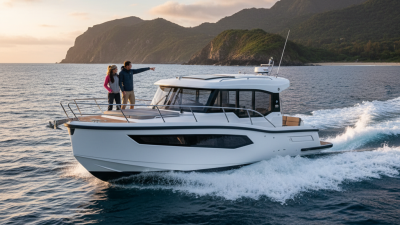
Compare 10 Fiberglass Yachts for Sale in 2026 by Builder and Model

In 2026, comparing ten fiberglass yachts means looking beyond the builder’s name or the model’s advertised length. Hull shape, deck layout, engine access, and storage tell you more about daily use. A narrow beam may feel efficient at the dock, yet less roomy during a long weekend. Inspect the finish closely. Small signs matter.

A balanced shortlist might include a 28-foot center-console, a 30-foot walkaround, and a 32-foot dual-console for coastal days. Add a 34-foot express cruiser and a 36-foot cabin cruiser for overnight trips.

Compare those with a 38-foot flybridge, a 40-foot sport cruiser, and a 42-foot sedan model. For longer stays, consider a 45-foot trawler-style yacht and a 48-foot raised-pilothouse model.

Within each pairing, compare the builder’s construction details with the model’s actual layout. Check stringer bonding, hatch fit, helm visibility, and access to pumps.

A polished interior can distract from awkward maintenance access.

Tips: Request the hull identification details and service records. Walk every deck, open lockers, and test switches. Bring a qualified marine surveyor; photographs rarely reveal soft spots or hidden repairs. Don’t rush.

Review Key Specifications: Hull Type, Engine Power, Fuel Capacity, and Range

When comparing ten fiberglass yachts, start with hull form, not cabin styling. A displacement hull favors economical cruising at lower speeds. A planing hull can run faster, but usually demands more engine power and fuel. Semi-displacement designs sit between them. Check whether the listed horsepower is total installed power, then compare it with loaded weight and intended cruising speed. A large engine number alone proves little. Numbers need context. Fuel capacity matters too, but usable capacity may be lower than the brochure figure.

Range depends on fuel burn at a steady cruise, not maximum speed. A simple estimate is usable fuel divided by hourly consumption, multiplied by speed. For example, 250 gallons at 25 gallons per hour and 20 knots gives 200 nautical miles before reserve. That is an illustration, not a prediction; weather, load, and hull condition change the result. The U.S. Energy Information Administration’s Monthly Energy Review lists about 137,381 Btu per gallon for distillate fuel and 120,214 for motor gasoline. Diesel’s higher energy content does not translate directly into longer range. Ask for sea-trial fuel-burn figures at several speeds, and leave a practical reserve. Sea trials matter. I would still treat any single range figure cautiously.

10 Best Fiberglass Yachts for Sale in 2026 — Review Key Specifications: Hull Type, Engine Power, Fuel Capacity, and Range

Rank Yacht Profile Length Overall Hull Type Typical Engine Power Fuel Capacity Estimated Range Best Suited For
1 28-ft day cruiser 8.5 m (28 ft) Fiberglass monohull, planing Single petrol outboard, 300–350 hp 400–500 L (106–132 US gal) Approximately 150–220 nm Day trips, watersports, and short coastal runs
2 32-ft express cruiser 9.8 m (32 ft) Fiberglass monohull, planing Twin petrol engines, 250–300 hp each 750–950 L (198–251 US gal) Approximately 180–260 nm Weekend cruising and overnight stays
3 35-ft offshore cruiser 10.7 m (35 ft) Fiberglass deep-V monohull, planing Twin petrol outboards, 300–400 hp each 1,000–1,300 L (264–343 US gal) Approximately 180–280 nm Offshore day boating and longer coastal passages
4 37-ft sport yacht 11.3 m (37 ft) Fiberglass monohull, planing Twin diesel engines, 350–440 hp each 900–1,200 L (238–317 US gal) Approximately 200–300 nm Fast coastal cruising with cabin accommodation
5 40-ft flybridge cruiser 12.2 m (40 ft) Fiberglass monohull, planing Twin diesel engines, 370–480 hp each 1,200–1,600 L (317–423 US gal) Approximately 220–340 nm Family cruising and entertaining aboard
6 42-ft trawler-style cruiser 12.8 m (42 ft) Fiberglass monohull, semi-displacement Twin diesel engines, 250–370 hp each 1,100–1,500 L (291–396 US gal) Approximately 500–800 nm Economical passagemaking at moderate speeds
7 45-ft motor yacht 13.7 m (45 ft) Fiberglass monohull, planing Twin diesel engines, 480–600 hp each 1,500–2,000 L (396–528 US gal) Approximately 220–350 nm Long weekends and comfortable coastal cruising
8 48-ft semi-displacement cruiser 14.6 m (48 ft) Fiberglass monohull, semi-displacement Twin diesel engines, 400–600 hp each 1,800–2,400 L (475–634 US gal) Approximately 400–700 nm Extended trips with a balance of speed and efficiency
9 50-ft flybridge yacht 15.2 m (50 ft) Fiberglass monohull, planing Twin diesel engines, 600–800 hp each 2,000–2,800 L (528–740 US gal) Approximately 250–400 nm Spacious cruising and entertaining for larger groups
10 55-ft expedition-style cruiser 16.8 m (55 ft) Fiberglass monohull, semi-displacement Twin diesel engines, 500–700 hp each 2,800–3,800 L (740–1,004 US gal) Approximately 600–1,000 nm Long-range cruising at economical displacement speeds

Specifications are indicative ranges for representative fiberglass yacht classes, not guaranteed specifications for a particular vessel. Actual engine options, fuel capacity, and range vary by configuration, load, sea conditions, and cruising speed. Range estimates assume a prudent fuel reserve; confirm details against the individual 2026 listing and its sea-trial or manufacturer documentation.

Check ISO 12215 Build Data and CE A–D Wind and Wave Design Limits

When comparing the 10 best fiberglass yachts for sale in 2026, look beyond polished interiors and advertised cruising range. Ask for the vessel’s ISO 12215 build data, including the applicable standard, structural calculations, and any recorded construction changes. These details help explain how hull panels and stiffeners were designed for expected loads. A brochure rarely shows the whole picture.

Check the CE design category on the builder’s plate and match it to the yacht’s documentation. Category A is intended for conditions exceeding Beaufort force 8 and significant wave heights above 4 metres. Category B covers up to force 8 and 4-metre waves; Category C, up to force 6 and 2 metres; Category D, up to force 4 and 0.3 metres. These are design limits, not promises of safety in every situation. Crew skill, loading, maintenance, and weather decisions still matter. Ask a marine surveyor to verify that the hull identification, plate, and records belong to the same boat. Paperwork can be incomplete. That happens. If figures conflict, pause the purchase and seek an independent explanation before relying on the yacht offshore.

Assess Survey Results, Maintenance Needs, and Estimated Ownership Costs

A fiberglass yacht can look immaculate while moisture hides beneath fresh gelcoat. Ask the surveyor to map moisture readings across the hull, then compare suspicious areas with dry reference points. Check for blistering, soft decking, stained bulkheads, and movement around chainplates or through-hulls. The National Marine Manufacturers Association’s 2024 Recreational Boating Statistical Abstract reports that about 85 million Americans went boating in 2022. That broad participation does not guarantee a sound used yacht; condition varies sharply with storage and upkeep. A survey is a snapshot, not a warranty. Small leaks matter.

Read the report’s findings alongside engine records, haul-out invoices, and receipts for rigging or systems work. The U.S. Coast Guard’s 2023 Recreational Boating Statistics recorded 564 recreational-boating deaths and 2,126 injuries. Those figures are not yacht-specific, but they reinforce the value of checking steering, electrical systems, bilge pumps, and safety equipment. Budget for surprises. As a planning allowance, reserve roughly 5–10% of the purchase price each year for maintenance, repairs, and routine servicing; age, size, and local labor rates can push costs higher. A corroded fitting may be cheap. Hidden core damage can turn expensive fast. Ask for separate estimates on haul-out, engine service, and any major survey findings before negotiating.