Choosing a Ferry Boat is a major operational investment, not simply a hull purchase. Route length, passenger demand, vehicle mix, port access, and weather all shape the right specification. A vessel suited to a short, sheltered crossing may struggle on a longer route with heavier loads. Small mismatches become costly.
The scale of maritime transport makes careful planning essential. UNCTAD’s Review of Maritime Transport 2024 notes that shipping carries over 80% of world trade by volume. The IMO’s Fourth Greenhouse Gas Study estimates that shipping produced 2.89% of global human-caused greenhouse gas emissions in 2018. These figures are not ferry-specific, but they underline why buyers should examine fuel use, propulsion options, and lifetime operating costs. As maritime economist Martin Stopford puts it, “Ships are built to carry cargo, not to carry costs.”
This guide presents ten practical checks for global buyers. Compare passenger and vehicle capacity against real route demand, not optimistic forecasts. Inspect machinery, safety systems, maintenance records, and spare-parts access. Ask suppliers for trial data and clear warranty terms. Look closely at the details. A ramp’s loading angle, a cabin’s layout, or a delayed engine part can affect daily service. No checklist removes every risk; specifications and local operating conditions still need careful review.
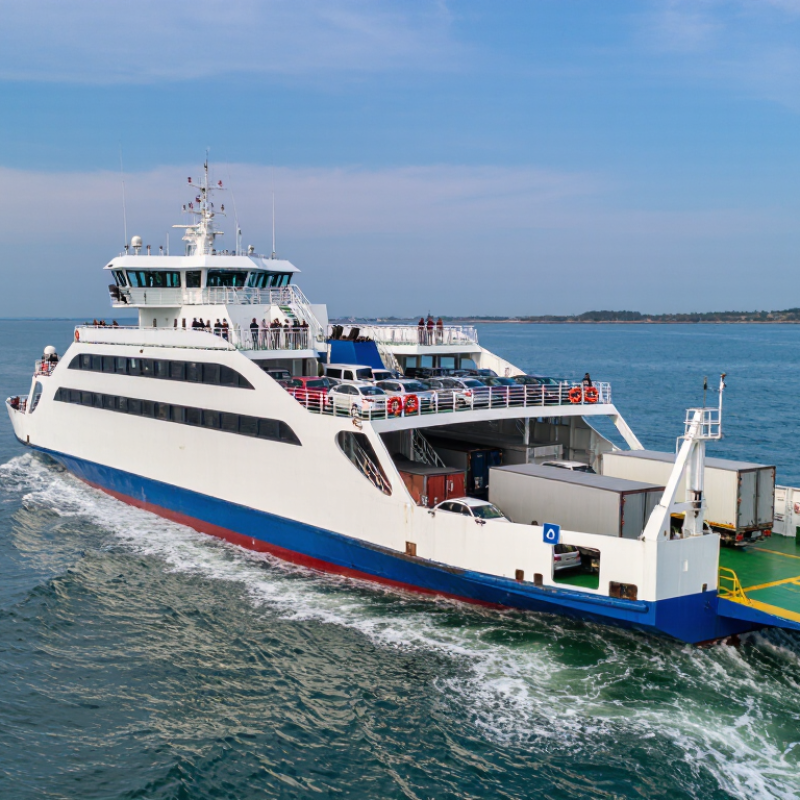
A ferry should be specified for its actual route, not an attractive maximum-capacity figure. Map sailing distance, turnaround time, berth depth, ramp geometry, and seasonal weather. A shallow harbor or short loading window can limit service more than engine power. Peak loads matter. Separate passengers, vehicles, bicycles, and freight; then model busy departures rather than daily averages. Eurostat reported 395.3 million seaborne passengers embarking and disembarking at EU ports in 2023. That figure signals market scale, but it cannot predict demand on your route.
Set capacity against the whole operating cycle. Include crew, fuel or charging stops, cleaning, maintenance, and realistic loading times. For a car ferry, count vehicle length and lane-meter needs, not just vehicle totals. For a commuter service, test standing and seated capacity during the morning rush. Test the timetable. A vessel that fits the route on paper may still miss connections when boarding takes longer than expected.
Energy choices also depend on route length, speed, port infrastructure, and reserve requirements. The IMO’s 2023 GHG Strategy targets net-zero greenhouse-gas emissions from international shipping by or around 2050, with indicative checkpoints for 2030 and 2040. Treat that as a planning signal, not a guarantee that one propulsion option suits every route. Plan for weather. I would challenge one assumption in many early specifications: the busiest day is not always the hardest day; a windy day with a delayed turnaround may reveal the real operating limit.
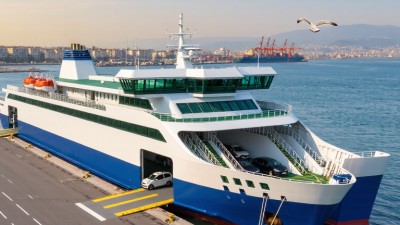
Begin with the route and payload, not a vessel’s headline capacity. Passenger-only ferries suit foot traffic; RoPax and vehicle ferries need deck space, loading access, and safe ramp angles. Record daily crossings, peak passenger numbers, vehicle mix, sailing speed, and time available at each berth. Small details matter. A 20-minute turnaround can change whether onboard charging is practical.
Compare conventional diesel, diesel-electric, hybrid, and battery-electric propulsion against that duty cycle. Battery systems can reduce local exhaust emissions, but range, charging capacity, weather, and reserve requirements matter. Hybrids may offer flexibility on routes with variable speeds or limited charging. IMO’s Fourth GHG Study (2020) estimated shipping emitted 1,056 million tonnes of CO2 equivalent in 2018, about 2.89% of global anthropogenic emissions. IMO’s 2023 GHG Strategy targets at least 20% lower emissions by 2030 and 70% by 2040, against 2008 levels; these are international-shipping targets, not a ferry-specific purchase rule. Compare installed power, usable battery capacity, fuel consumption at operating speeds, draft, passenger capacity, and maintenance access. Ask for trial or comparable-route data. I would still treat modeled savings cautiously; actual schedules can be messy.
A ferry’s certificate pack should match its flag, route, passenger capacity, and construction date. SOLAS requirements generally apply to passenger ships on international voyages, while domestic services may follow different national or regional rules. Ask the seller for the applicable passenger-ship safety certificate, inspection records, and evidence of required safety-management compliance. Check expiry dates and confirm details with the issuing authority; a scanned certificate alone is not proof of current validity.
Look closely at lifesaving appliances, fire doors, evacuation routes, and ramp or hull corrosion during an independent survey. Paperwork can miss wear. Rules also vary by region: for example, the European Union’s passenger-ship framework covers specified domestic voyages, with requirements shaped by vessel class and operating area. Confirm local rules with the flag administration and intended ports before signing. EMSA’s Annual Overview of Marine Casualties and Incidents 2023 recorded 2,510 casualties and incidents in 2022 across ship types. That figure is not ferry-specific, but it shows why documented compliance and physical condition both matter. Details matter. A practical gap remains: buyers may review certificates carefully yet overlook whether crew drills and maintenance records reflect everyday operations.
| # | Buying Dimension | What to Check | Documents or Evidence to Request | Regional and Regulatory Considerations |
|---|---|---|---|---|
| 1 | Define the operating profile | Confirm route length, passenger capacity, vehicle or cargo load, operating speed, sea state, duty cycle, and whether the service is domestic, international, coastal, or inland. | Route and operating assumptions, design specification, capacity plan, and preliminary regulatory assessment. | Applicable requirements depend on flag, route, vessel size, passenger capacity, propulsion, and service type. Ask the relevant maritime authority to confirm the vessel’s classification before purchase. |
| 2 | Verify passenger-vessel safety approval | Check that the design and vessel are accepted for the intended passenger service, and that required inspections and operating approvals can be obtained. | Current inspection reports, passenger-vessel safety certificates where applicable, approved plans, and written confirmation of the vessel’s operating category. | SOLAS applies to relevant ships on international voyages, subject to its scope and exemptions; domestic passenger ferries are generally regulated by the flag or local maritime authority. Do not assume one approval automatically applies worldwide. |
| 3 | Check fire protection and lifesaving systems | Review fire detection and suppression, escape routes, emergency lighting, lifejackets, liferafts or other survival craft, alarms, and passenger muster arrangements. | Equipment inventory, service and maintenance records, inspection certificates, safety-plan drawings, and demonstration or test records. | Required equipment and quantities vary with vessel type, capacity, route, and national rules. Confirm that equipment approvals and servicing are accepted in the intended jurisdiction. |
| 4 | Confirm stability and loading limits | Assess stability in expected loading conditions, including passenger distribution, vehicles, cargo, fuel, and ballast. Verify safe limits for ramps and vehicle decks. | Approved stability booklet, loading manual, inclining-test information where applicable, and ramp or deck load limits. | Stability and loading documentation must meet the standards accepted by the vessel’s flag administration or delegated authority. Operating restrictions may differ by route and service. |
| 5 | Review construction and class status | Examine hull structure, machinery, electrical systems, corrosion protection, and any damage or repair history. Verify the scope and status of any classification survey. | Hull survey, thickness measurements where relevant, maintenance and repair records, class status report if classed, and outstanding-condition list. | Classification is an independent technical assessment and is not, by itself, a substitute for statutory approval or an operating permit. Confirm what the authority requires for the intended service. |
| 6 | Match propulsion and emissions rules | Compare engine power, fuel type, expected consumption, service support, and emissions performance with the route and operating schedule. | Engine specifications, emissions documentation, fuel-consumption data, maintenance schedule, and parts or service availability plan. | MARPOL requirements, including air-pollution controls, apply according to the vessel’s scope and circumstances. Local ports or coastal areas may impose additional fuel, emissions, or shore-power rules. |
| 7 | Check pollution-prevention arrangements | Inspect arrangements for sewage, garbage, bilge water, oily residues, and fuel or lubricant spills; confirm that onboard systems suit the planned operations. | Pollution-control equipment list, waste-management procedures, relevant certificates where required, and discharge or service records for existing vessels. | MARPOL annex requirements and local discharge restrictions depend on vessel applicability and operating area. Confirm port reception and waste-handling requirements for each route. |
| 8 | Assess accessibility and passenger flow | Review boarding arrangements, ramps, accessible routes, seating, toilets, signage, and evacuation access for passengers with reduced mobility. | General arrangement drawings, accessibility features list, boarding interface details, and a compliance review for the intended route. | Accessibility obligations differ by country and can involve both vessel design and shoreside facilities. Obtain advice from the relevant transport and maritime authorities before finalizing the specification. |
| 9 | Verify navigation and communications equipment | Confirm that navigation lights, radar or other required equipment, radio communications, distress systems, and bridge alarms are appropriate for the voyage and crew. | Equipment inventory, radio and safety-system test reports, equipment approvals where required, and bridge arrangement drawings. | Carriage and licensing requirements vary with vessel size, voyage, and national rules. For international voyages, check applicable SOLAS and radio requirements with the flag administration. |
| 10 | Plan surveys, registration, and delivery | Make the sale conditional on satisfactory survey, document review, defect resolution, and confirmation that the vessel can be registered and operated as intended. | Bill of sale, builder’s or previous ownership documents, tonnage and measurement records where applicable, survey findings, and delivery-condition checklist. | Registration, import, flagging, certification, and crew requirements are jurisdiction-specific. Verify the complete approval pathway with the destination authority before signing or importing the vessel. |
Note: Regulatory applicability depends on the vessel’s design, tonnage, passenger capacity, voyage, flag, and local law. Confirm requirements with the competent maritime authority and qualified marine surveyors before purchase.
Arrange an independent marine survey before committing to a ferry purchase. Walk the hull and deck slowly, checking for cracks, soft spots, uneven welds, and corrosion around fittings. Look beneath floor panels for standing water, loose wiring, or fresh paint hiding repairs. A clean deck can mislead. Compare engine-hour readings with service records, and note any warning lights during startup. Bring a flashlight. During a sea trial, observe steering response, vibration, exhaust color, and how the vessel handles at different speeds. Record questions as you go; small details are easy to forget later.
Verify the seller’s identity and authority to sell, then compare vessel identification details across available registration and ownership documents. Ask for original maintenance logs, repair invoices, inspection reports, and records of major component replacements. Dates and engine hours should form a credible timeline. If entries are missing, ask why; an explanation is useful, but it is not proof. Confirm important documents with the relevant registry or a qualified local maritime adviser. A polished presentation and confident seller can still leave gaps. I would rather delay a decision than accept an unclear repair history.
Treat the ferry as a working asset, not just a purchase price. Model at least ten years of fuel or electricity, crew training, insurance, inspections, scheduled maintenance, and battery or engine replacement. Ask the builder for service intervals, spare-parts prices, and warranty exclusions in writing. Then add port charges, taxes, financing, and a contingency for downtime. Small items matter: a delayed seal or control unit can keep a vessel at berth. That adds up.
Delivery costs need their own budget. Include transport, lifting, port handling, commissioning, crew travel, and sea trials. UNCTAD’s Review of Maritime Transport 2024 reports that seaborne trade grew 2.4% in 2023, while demand measured in ton-miles rose 4.2%, partly reflecting longer routes and disruptions. Request a delivery route, named cost responsibilities, and a schedule with buffer days. Plan for delay.
Support should be checked before signing. Confirm who responds after handover, local technician availability, remote diagnostics, and parts lead times. The IMO’s 2023 GHG Strategy aims to cut shipping emissions by at least 20% by 2030, striving for 30%, compared with 2008. Ask how future efficiency upgrades could affect equipment, training, and operating costs. I would not assume every upgrade will pay back quickly; test the numbers against your route, passenger load, and seasonal schedule.
A sample 10-year ownership budget illustrates why the purchase price is only one part of a ferry’s cost. Include operating, maintenance, delivery and support costs when comparing options.
Illustrative planning scenario only—not an industry benchmark or a supplier quotation. Values are in USD millions; actual costs vary with vessel size, route, fuel, crew requirements, local regulations, delivery distance and service agreements. Obtain route-specific operating estimates and written delivery and support terms before purchase.