Leave Your Message

How to Buy the Right Ferry Boat in 2026?

Buying the right Ferry Boat in 2026 is not a simple search for the lowest quoted price. Passenger demand, emissions rules, route geometry, and crew workload now shape the decision. UNCTAD’s Review of Maritime Transport 2024 confirms that ships carry over 80% of global merchandise trade by volume. Eurostat recorded approximately 395 million maritime passenger journeys in the European Union during 2023. These figures show a resilient market, but they do not guarantee a profitable vessel on every route.

A serious buyer should begin with operating evidence, not attractive brochures. Measure daily passenger peaks, vehicle mix, crossing time, berth conditions, tidal limits, and winter weather. A Ferry Boat designed for sheltered water may struggle with heavy spray, short waves, or frequent ramp movements. DNV’s Maritime Forecast to 2050 highlights energy efficiency, alternative fuels, electrification, and onboard digital systems as major maritime priorities. The practical choice may be battery-electric, hybrid, dual-fuel, or a conventional design with efficiency upgrades. It depends on distance, charging access, grid reliability, fuel supply, and maintenance skills.

The cheapest hull can become the most expensive decision. A spreadsheet cannot feel a crosswind. Buyers should request verified fuel data, class documentation, lifecycle cost estimates, battery degradation assumptions, and independent technical inspections. The International Maritime Organization’s 2023 greenhouse-gas strategy adds further pressure toward lower-emission operations by mid-century. Still, predictions contain uncertainty. No model gets every assumption right. This guide examines how to compare vessels, suppliers, financing risks, safety features, and long-term operating value before signing a purchase agreement.

How to Buy the Right Ferry Boat in 2026?

Define Your Ferry’s Mission, Route, Capacity, and Operating Conditions

How to Buy the Right Ferry Boat in 2026?

Define Your Ferry’s Mission, Route, Capacity, and Operating Conditions

A ferry should serve a clear mission before you compare hulls or engines. Will it carry commuters, tourists, vehicles, bicycles, or mixed loads? A short urban crossing needs fast boarding and frequent departures. A longer route may require better seating, toilets, luggage storage, and weather protection. Write the daily schedule, not an ideal schedule. Include peak-hour demand, seasonal changes, and expected growth.

Route details shape the vessel more than many buyers expect. Measure channel depth, turning space, dock height, current speed, wind exposure, and wave conditions. A boat that performs well in calm water may roll uncomfortably on an open crossing. Check its loaded draft against the lowest seasonal depth. Ask a naval architect to review stability, propulsion, evacuation access, and local certification requirements. Small oversights become expensive during commissioning.

Capacity is not only a passenger number. Count seats, standing areas, crew stations, bicycles, vehicles, and emergency equipment. Then test the boarding cycle with real luggage and mobility devices. Operating conditions also include water temperature, salt exposure, ice risk, maintenance access, and available shore power. Electric propulsion may suit a short route, but charging time and backup planning need honest calculations. Fuel systems may offer flexibility, yet storage, noise, and emissions deserve scrutiny. A neat spreadsheet can still mislead. Build a trial schedule, inspect comparable vessels in service, and leave room for an uncomfortable correction.

Compare Ferry Types, Hull Designs, Propulsion Systems, and Key Features

How to Buy the Right Ferry Boat in 2026?

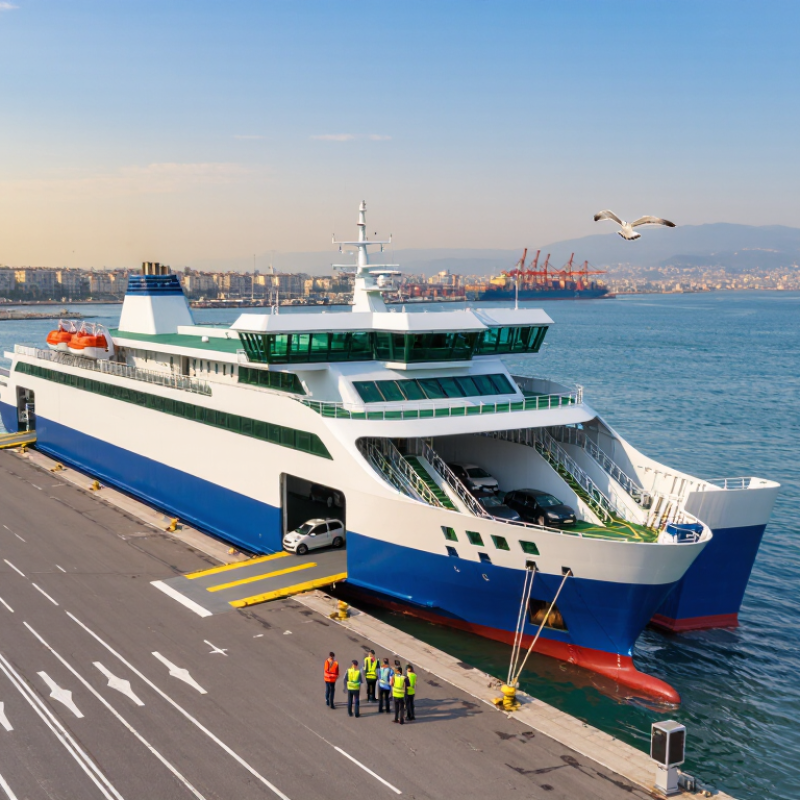
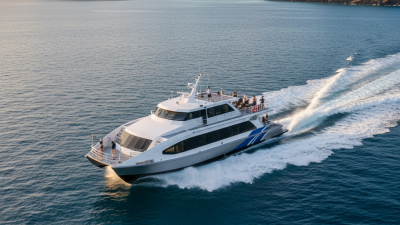
Choosing a ferry starts with the route, not the brochure. A high-speed catamaran suits short crossings and frequent departures. A monohull may offer better comfort in rougher water. A landing ferry works well where docks are shallow or vehicles need direct access. Passenger-only boats reduce draft and simplify boarding. However, capacity estimates often look optimistic. Check peak-hour demand, not average daily traffic.

Hull design affects fuel use, stability, noise, and maintenance. Catamarans provide a wide deck and reduced rolling, but their structure can require careful inspection. Monohulls usually handle varied sea conditions predictably. Ask for loading tests, stability documents, and service records. Walk through the engine room yourself. Look for salt corrosion near joints, valves, and cable entries. Small leaks become expensive quickly.

Propulsion choices should match the route profile. Diesel systems remain practical for long distances and limited charging access. Battery-electric systems can reduce local emissions on short, fixed routes. Hybrid systems add flexibility, but they require trained technicians and battery monitoring. Examine acceleration, cruising speed, fuel consumption, charging time, and emergency redundancy. Safety features matter equally: clear evacuation paths, non-slip decks, accessible life-saving equipment, reliable bilge pumps, and dependable navigation instruments. My early comparison focused too much on speed. That was a mistake. Passenger flow and maintenance access deserved more attention. Test the boat with realistic loads, weather limits, and docking conditions before signing.

Calculate the Full Purchase, Ownership, Crew, Fuel, and Maintenance Costs

How to Buy the Right Ferry Boat in 2026?

The purchase price is only the starting point. A ferry may require inspections, registration, delivery, safety equipment, and dock modifications. Obtain written quotations for each item before signing. I have seen buyers underestimate delivery costs by thousands of dollars. That mistake can damage an otherwise sound budget.

Crew costs often become the largest annual expense. Calculate captain wages, deckhand wages, training, insurance, meals, and relief staff. Fuel consumption depends on route length, passenger load, speed, and weather. Record actual fuel use during sea trials, not only the seller’s estimate. Maintenance needs a separate reserve for engines, hull coatings, electrical systems, pumps, and unexpected repairs. Some owners budget too little for corrosion. I once considered a maintenance forecast reliable, but it ignored repeated saltwater damage.

Tips

Build a five-year cost spreadsheet. Include purchase financing, permits, fuel price changes, wages, dry-docking, spare parts, and downtime. Add at least a 10–15 percent contingency reserve.

Ask an independent marine surveyor to inspect machinery, structure, and service records. Compare cost per passenger trip, not only the vessel’s purchase price.

A cheaper boat can consume more fuel and lose revenue through frequent repairs. Also test loading and unloading times at your real terminals. Small delays become expensive quickly.

Inspect Safety Standards, Certification, Construction Quality, and Vessel History

How to Buy the Right Ferry Boat in 2026?

Inspect Safety Standards, Certification, Construction Quality, and Vessel History

Buying a ferry in 2026 begins with evidence, not polished photos. Ask which safety standards apply to the intended route, passenger capacity, and operating waters. Request current certificates from the relevant maritime authority and recognized classification body. Check expiry dates, operating limits, inspection conditions, and outstanding corrective actions. A certificate is useful, but it is not proof of perfect care.

Hire an independent marine surveyor before signing anything. Examine watertight doors, fire boundaries, life-saving equipment, alarms, navigation systems, and emergency lighting. Open access panels where possible. Rust around welds, damp insulation, oil-stained bilges, and uneven deck repairs deserve careful investigation. Ask for thickness measurements on the hull and structural members. I once trusted clean paint too quickly; fresh coating can hide corrosion. That mistake still influences my inspections.

Study the vessel history like a maintenance diary. Compare engine hours, dry-dock reports, defect lists, casualty records, refits, and ownership changes. Verify that repairs were approved and documented, not merely described by a seller. A supervised sea trial should test steering, propulsion, stopping distance, vibration, passenger-flow arrangements, and watertight integrity. Keep questions in writing and compare answers with logbooks. If records conflict, pause. Missing paperwork may reflect poor administration, or a deeper maintenance problem. The cheaper vessel can become the more expensive one.

How to Buy the Right Ferry Boat in 2026? — Safety, Certification, Construction Quality, and Vessel History Inspection Table
Inspection Dimension Verified Requirement or Measurable Data Documents and Physical Evidence to Request Buyer Acceptance Rule Risk Rating
Passenger Safety Certification A valid Passenger Ship Safety Certificate should cover the vessel’s approved route, passenger capacity, machinery, fire protection, life-saving appliances, and radio equipment under the applicable SOLAS requirements. Current Passenger Ship Safety Certificate, approved plans, certificate validity dates, flag-state endorsements, and records of outstanding recommendations. Accept only when the certificate is current, route-specific, and consistent with the vessel’s actual layout and passenger capacity. Low when verified
Safety Management System The vessel should operate under the International Safety Management Code with a valid Safety Management Certificate. The operating company should hold a corresponding Document of Compliance for the vessel type. Safety Management Certificate, company Document of Compliance, internal audit reports, non-conformity records, emergency drill logs, and corrective-action evidence. Require no overdue major non-conformities and evidence that corrective actions were closed and verified. Medium if records are incomplete
Security Compliance A passenger ferry engaged on international voyages generally requires an International Ship Security Certificate under the ISPS Code, supported by an approved ship security plan. International Ship Security Certificate, security-plan approval, drills and exercises, access-control logs, and security-equipment maintenance records. The certificate, approved security plan, and physical access arrangements must match the intended operation. Medium
Load Line and Watertight Integrity The vessel must have a valid International Load Line Certificate where applicable. Watertight doors, hatches, ramps, shell doors, seals, and bilge systems must function as designed. Load Line Certificate, latest load-line survey, watertight-door test reports, ramp inspection records, seal-condition photographs, and bilge-pump test results. Reject or require repair before delivery if any critical shell opening, watertight door, or ramp cannot be demonstrated operational. High if defects exist
Stability and Passenger Capacity The approved stability information must cover full-load, partial-load, vehicle-deck, crowding, and damage-stability conditions applicable to the ferry’s service. Approved stability booklet, loading computer approval, inclining-test report, lightweight survey, passenger-capacity approval, and loading-limit procedures. The intended passenger, vehicle, fuel, and cargo loads must remain within the approved stability limits. High if data is missing
Fire Protection Fire detection, alarms, fixed fire-extinguishing systems, fire pumps, emergency fire pumps, hydrants, fire doors, escape routes, and fire-control plans must comply with the applicable SOLAS fire-safety requirements. Fire-control plan, fixed-system service certificates, fire-door inspection records, fire-pump flow tests, detector test logs, and evacuation-route inspection. All critical systems should be tested under load, with no blocked escape routes or defective fire doors. High if systems are untested
Life-Saving Appliances Life-saving appliances must provide the approved capacity for all persons onboard, including passengers and crew. Lifeboats, rescue boats, life rafts, launching appliances, lifejackets, and immersion-protection equipment require current servicing. LSA inventory, capacity plan, annual and five-year service records, launching-appliance inspection, hydrostatic-release-unit records, and drill reports. Do not close the purchase if capacity, service dates, or launching arrangements cannot be verified. High if overdue
Hull and Structural Condition Ultrasonic thickness measurements should be compared with the approved minimum scantlings. Areas of corrosion, deformation, cracking, buckling, or wasted plating require engineering assessment. Recent thickness-measurement report, dry-dock report, hull survey, weld inspection results, repair history, and photographs of the shell, decks, ramps, and vehicle spaces. Accept only when measured thicknesses meet approved limits or documented repairs have been accepted by the responsible authority or class organization. Medium to high
Machinery and Propulsion Main engines, gearboxes, shafts, propellers, steering gear, generators, fuel systems, and cooling systems should pass operational testing at normal and emergency conditions. Engine-hour records, overhaul history, oil-analysis results, vibration reports, shaft-alignment records, sea-trial data, generator-load tests, and steering-gear tests. Require a witnessed sea trial and written correction plan for abnormal vibration, overheating, leakage, smoke, or unstable operating parameters. Medium
Electrical and Emergency Power Emergency lighting, emergency switchboards, batteries, alarms, navigation equipment, communication systems, and backup power must operate during simulated loss of main power. Electrical inspection report, insulation-resistance tests, battery-capacity tests, emergency-generator test, alarm logs, navigation-equipment service records, and blackout-test results. The vessel should complete a documented blackout test without loss of essential safety functions. Medium
Pollution Prevention Applicable MARPOL certificates and equipment should cover oil pollution, sewage, garbage, air emissions, and fuel management for the vessel’s intended route. International Oil Pollution Prevention Certificate, sewage and garbage records, oil-record book, fuel-changeover procedures where applicable, and waste-disposal receipts. No unexplained discharge, missing record, bypass arrangement, or overdue pollution-prevention service should remain open. Medium
Class or Statutory Survey Status Where the vessel is classed, its class status should be active with no overdue annual, intermediate, special, dry-dock, or machinery surveys. Statutory certificates must also be synchronized with survey dates. Class status report, survey cycle, conditions of class, recommendations, memoranda, statutory certificates, and list of overdue items. Reject an undisclosed overdue survey or unresolved condition affecting hull, machinery, stability, fire safety, or lifesaving systems. High if overdue
Port-State-Control History Review at least the previous five years of inspections, deficiencies, detentions, repeated findings, and corrective actions. Repeated deficiencies are more significant than isolated minor findings. Port-state-control inspection reports, detention records, deficiency close-out evidence, flag-state correspondence, and evidence of recurring-defect analysis. Require a documented explanation and verified close-out for every detention, serious deficiency, or repeated safety finding. Medium to high
Accident and Casualty History Investigate collisions, groundings, fires, flooding, structural failures, machinery failures, passenger injuries, pollution events, and major repairs. Casualty reports, insurance claims summary, repair invoices, class-approved repair drawings, damage surveys, and independent technical assessments. Do not rely on verbal declarations; require documentary proof that repairs restored the vessel to an approved condition. High if undocumented
Construction and Modification Records Confirm original build standards, construction material, welding procedures, major machinery installations, conversions, passenger-space changes, and vehicle-ramp modifications. Builder’s certificate, construction drawings, material certificates, welding and non-destructive-testing records, modification approvals, and as-built plans. Every safety-critical modification should be reflected in approved drawings, certificates, and the current stability information. Medium
Sea Trial and Independent Inspection A pre-purchase inspection should include dry-dock or underwater examination where appropriate, machinery testing, steering tests, emergency drills, ramp operation, noise and vibration checks, and a witnessed sea trial. Independent surveyor’s report, sea-trial protocol, test results, defect list, photographs, repair quotations, and final acceptance certificate. Make final payment conditional on closing safety-critical defects and receiving updated certificates. Low after independent verification
Buyer’s decision rule: A ferry should not be purchased solely because its certificates are current. Confirm that the certificates match the intended route, passenger capacity, loading pattern, flag requirements, and physical condition. Any missing certificate, overdue survey, unresolved detention, undocumented structural repair, or unverified lifesaving deficiency should be treated as a purchase-stopping issue until independently resolved.

Evaluate Builders, Financing, Delivery Plans, Warranties, and After-Sales Support

How to Buy the Right Ferry Boat in 2026?

Choosing a ferry builder requires more than comparing purchase prices. Review audited delivery records, classification approvals, sea-trial results, and defect reports. Ask for references from operators using similar routes and passenger capacities. The IMO’s 2023 GHG Strategy targets net-zero emissions from international shipping around 2050. Therefore, compare fuel efficiency, battery readiness, shore-power compatibility, and maintenance access. A cheaper vessel may become expensive during daily operations.

Financing should match the boat’s revenue cycle, not only its construction cost. Request a clear payment schedule linked to verified milestones. Delivery plans must include material delays, port testing, crew training, and spare-parts storage. Warranty language should define response times, covered systems, and labor costs. After-sales support matters most during the first harsh winter. UNCTAD’s Review of Maritime Transport 2024 highlights continuing fleet investment pressures and operational uncertainty. I would not assume every promised delivery date is realistic. Build contingency time.

Tips: Keep a technical scorecard. Give separate scores for price, fuel use, downtime, warranty strength, and local service. Demand five-year lifecycle estimates. Check who pays when a battery module, ramp actuator, or navigation system fails. DNV’s Maritime Forecast to 2050 stresses scenario planning for fuel and regulatory changes. Ask the builder to test those scenarios in writing. Small omissions can become large invoices.

How to Buy the Right Ferry Boat in 2026

A realistic procurement plan should allow time for requirements definition, design approval, construction, trials, and delivery. The figures below are indicative industry planning ranges for a new-build ferry and should be confirmed with qualified builders.

Typical total planning time: approximately 18–38 months. Compare builders by their ability to provide a documented schedule, financing milestones, warranty terms, spare-parts support, crew training, and post-delivery service.