Leave Your Message
Choosing the right Fishing Boat is rarely about finding the largest or most expensive model. It begins with understanding how, where, and with whom you plan to fish. A calm inland lake demands different features from a windy coastal inlet. Hull design, engine performance, fuel capacity, storage, and seating can change your entire day on the water. Even small details matter. A non-slip deck may prevent a painful fall, while a well-placed livewell can keep bait organized.
This guide presents ten practical tips for making a more confident choice. It considers fishing style, boat size, stability, towing needs, maintenance, electronics, and safety equipment. Manufacturer specifications provide useful starting points, but real-world handling deserves equal attention. Walk across the deck. Test the steering response. Check whether two anglers can move without hitting rods or coolers. Ask a qualified dealer or marine surveyor about weaknesses that brochures may overlook.
No boat fits everyone.
Budget matters, but ownership costs matter more. Insurance, storage, fuel, repairs, registration, and routine servicing can quietly reshape the decision. A boat that looks affordable may become expensive after one season. That mistake is common. Weather, water conditions, and local boating requirements should also influence your selection. Requirements can differ by location, so confirm current guidance with the relevant authority. The best choice is not always perfect. It should be safe, practical, reliable, and suitable for your actual fishing habits. Take your time, question impressive claims, and leave room for honest reconsideration.
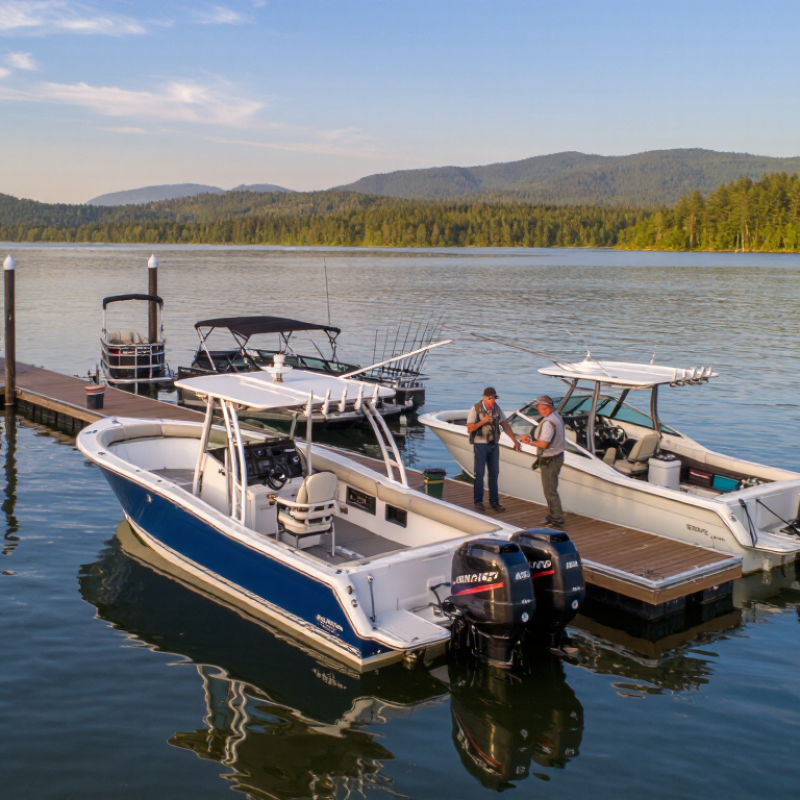
Choosing the right fishing boat starts with your actual fishing routine, not the boat’s showroom appearance. Define where you fish, how many people come aboard, and what conditions you can safely handle. Inshore flats, inland lakes, and offshore waters demand different hull designs, fuel ranges, and storage plans. The U.S. Coast Guard reported 4,064 recreational boating accidents in 2023, with 556 deaths. Those figures make stability, visibility, and reliable safety equipment practical priorities.
Tip 1: Match the hull to your water. A shallow draft helps in flats, while a deeper V-hull can soften offshore waves. Tip 2: Measure your normal crew, not your maximum dream crew. Four anglers need elbow room, livewell capacity, and clear casting lanes. Tip 3: Check fishing-specific storage. Rod lockers, dry compartments, and insulated fish boxes reduce clutter during a busy morning.
Tip 4: Calculate realistic fuel use with reserve included. Wind, current, and extra weight can change the result. Tip 5: Confirm the boat’s capacity plate and load distribution. The National Marine Manufacturers Association’s 2023 Recreational Boating Statistical Abstract recorded about 11.6 million registered recreational boats in the United States, showing how varied ownership needs can be. Tip 6: Test the helm while standing and seated. Small controls can become frustrating after several hours. I once underestimated shade and drainage; that mistake still feels obvious on hot, wet afternoons. A careful sea trial may challenge your first choice.
| Tip | Fishing Need or Priority | Boat Characteristics to Consider | Practical Checks Before Buying | Useful Real-World Benchmark |
|---|---|---|---|---|
| 1Define Your Main Fishing Environment | Location Inland lakes, rivers, bays, or offshore waters |
Choose a hull and layout designed for the water conditions you expect most often. Smaller shallow-water boats suit protected areas, while offshore trips require greater freeboard, stability, and weather protection. | List the launch ramps, waterways, average wave conditions, and distance from shore that will define most of your trips. | A boat used on open water should provide more weather protection and reserve buoyancy than one used only on sheltered ponds or small lakes. |
| 2Match the Boat to Your Target Species | Fishing Style Bass, panfish, inshore species, bottom fish, or offshore game fish |
Consider casting decks, livewells, rod storage, bait stations, fish boxes, and cockpit space. Different species and techniques require different working areas. | Measure the number and length of rods you normally carry, and confirm that tackle storage is accessible while underway. | Active casting generally benefits from an uncluttered forward deck, while bait and bottom fishing usually require more cockpit workspace. |
| 3Choose the Appropriate Boat Length | Capacity Number of passengers, gear, and fishing equipment |
Longer boats often provide more interior space, carrying capacity, and stability, but they may be heavier, more expensive to store, and harder to launch. | Compare the boat's passenger capacity, maximum weight capacity, trailer rating, storage dimensions, and garage or driveway limitations. | Never plan to operate at the published maximum capacity as a normal routine; reserve space and weight for fuel, batteries, ice, safety equipment, and changing conditions. |
| 4Prioritize Stability and Freeboard | Safety Confidence while moving around and fishing |
A stable beam, suitable hull shape, and adequate freeboard can improve comfort and reduce the risk of taking water over the side. | Stand and shift weight carefully during an inspection. Check whether the boat remains level when passengers move between the bow, cockpit, and stern. | Stability should be evaluated with the boat loaded as it will be used, including passengers, fuel, batteries, coolers, and fishing gear. |
| 5Evaluate Draft and Access to Shallow Water | Access Fishing flats, backwaters, coves, and shallow shorelines |
Shallow-draft designs improve access to shallow areas, while deeper hulls and lower units may offer better performance and comfort in deeper or rougher water. | Check the stated operating draft, propeller or drive clearance, transom design, and whether a suitable shallow-water propulsion system is available. | Actual draft changes with passenger, fuel, and gear weight, so published draft figures should not be treated as a guaranteed minimum in every condition. |
| 6Size the Engine for the Intended Use | Performance Acceleration, cruising, range, and load handling |
The engine should fall within the boat builder's approved horsepower range. An engine that is too small may struggle under load; excessive power can create safety and compliance issues. | Verify the maximum rated horsepower, engine weight limits, fuel capacity, expected cruising speed, and service requirements. | Use the manufacturer's rated limits and never exceed the boat's maximum horsepower or weight specifications. |
| 7Plan for Fuel Range and Operating Costs | Budget Fuel, maintenance, storage, insurance, and launch expenses |
Fuel capacity, propulsion type, hull efficiency, and cruising speed all influence operating range and running costs. | Estimate fuel consumption for a typical trip, then include a reserve for weather changes, detours, idling, and unexpected delays. | A commonly used boating safety practice is to follow the one-third fuel rule: one-third for the trip out, one-third for the return, and one-third kept in reserve. |
| 8Check the Fishing Layout and Storage | Organization Efficient access to rods, tackle, bait, and catch |
Look for dry storage, lockable compartments, rod holders, insulated fish boxes, livewells where appropriate, and surfaces that are easy to clean. | Bring representative rods, tackle boxes, coolers, and safety equipment to confirm that they fit without blocking walkways or emergency access. | Storage should keep heavy items low and secured, reducing clutter and helping maintain the boat's balance underway. |
| 9Consider Comfort and Weather Protection | Endurance Long days, changing weather, and passenger comfort |
Evaluate seating, helm ergonomics, shade, wind protection, drainage, nonslip surfaces, and the availability of a suitable cover. | Sit at the helm, check visibility in both seated and standing positions, inspect windshield or console protection, and test access to controls. | Comfort features should support safe operation rather than reduce clear visibility, restrict movement, or obstruct access to safety equipment. |
| 10Inspect Safety Equipment and Ownership Practicality | Long-Term Value Reliability, compliance, maintenance, and resale practicality |
Look for reliable bilge systems, navigation lights, battery isolation, fire protection where required, secure fuel systems, and accessible emergency equipment. | Review maintenance records, inspect the hull and transom, test electrical systems, check the trailer, and arrange a professional survey or sea trial when appropriate. | Required safety equipment varies by jurisdiction and boat type, so confirm current local regulations before operating the boat. |